
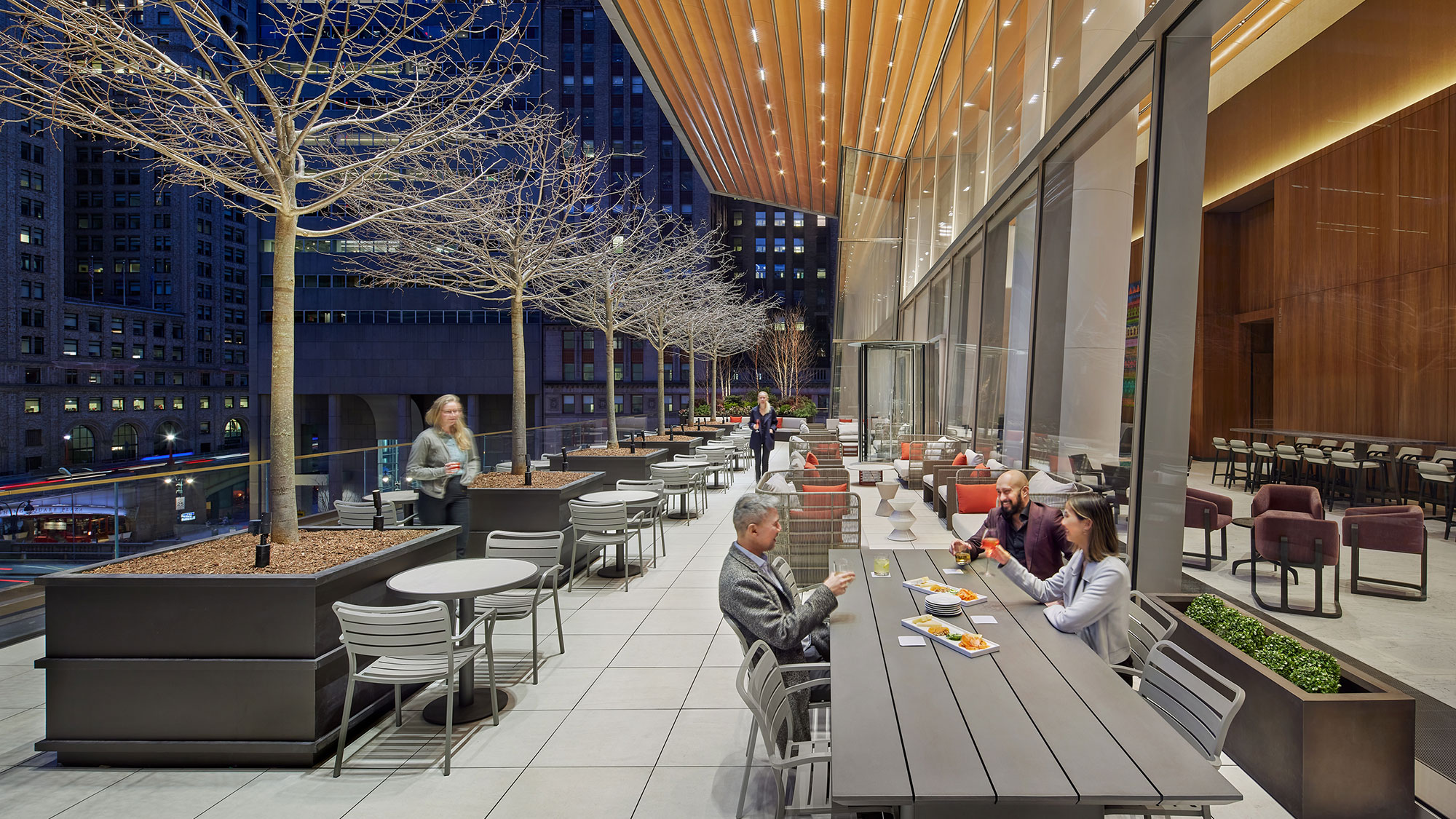
Mixed-Use Development Roofing in McAllen, TX
Mixed-Use Roofing in McAllen, TX
A mixed-use building is really several buildings stacked on one footprint, and the roof reflects that. Ground-floor shops along corridors like 10th Street and Nolana keep retail hours, the apartments or offices above keep their own, and somewhere in between there is usually a podium deck doing double duty as both a roof and a floor people walk on. McAllen has leaned hard into this format as it has tried to build a denser, more walkable core around downtown and the Entertainment District near the Convention Center and Performing Arts Center, and the redevelopment along the Bicentennial and Nolana corridors keeps producing exactly these layered structures. Roofing them well means treating each layer on its own terms instead of pretending the building is one flat plane.
The reason this matters here specifically: McAllen's retail pull reaches across the border, with La Plaza Mall and the surrounding shopping district drawing shoppers from Reynosa and beyond. The ground-floor retail in a mixed-use project is rarely empty, and the residents above are home in the evenings, so there is no convenient moment when the whole building clears out. The work has to be phased around two different sets of occupants who never leave at the same time.
The Podium Deck Is Not a Roof You Can Treat Like a Roof
The deck that separates ground-floor retail or structured parking from the residential or office levels above is the part that punishes shortcuts. It carries foot traffic, sometimes planters and landscaped plaza areas, and constant structural deflection as the building moves, and a standard low-slope membrane is simply the wrong product for it. Podium waterproofing on a McAllen project means a traffic-bearing assembly, a drainage composite to relieve hydrostatic pressure, root barriers wherever there is soil, and a load path worked out with the structural engineer before anything goes down. When a podium leaks, the water shows up in occupied retail or a parking level directly below, so this is the assembly we slow down on and the one we mock up and flood-test before we cover it.
Two or Three Roof Areas, One Warranty to Coordinate
Above the podium, the upper roof areas behave more like conventional commercial low-slope work, but with their own complications: parapet drainage on the residential levels, flash-through details at mechanical penthouses, amenity-deck waterproofing where there is a rooftop terrace, and tie-ins around elevator overruns and mechanical enclosures. The trap on mixed-use is letting the field membrane, the amenity deck, and the podium each carry a separate warranty that points fingers at the next system when water appears. We map the warranty boundaries up front and coordinate the manufacturer registrations so the owner ends up with coverage that actually connects across the assemblies rather than three certificates with gaps between them.
Working Above and Below Live Tenants
On an occupied mixed-use building we phase the roof so that shops can open and residents can sleep. Noise, vibration, and dust controls are set before we mobilize, crane and material staging is coordinated with the retail loading and resident parking below, and the work area is dried in and confirmed watertight in writing before each day ends. On new construction we slot into the general contractor's schedule and the submittal and QC framework the architect and envelope consultant set, hitting the mock-up and inspection holds at the points they specify. Either way the building stays usable while the roof gets done.
Why Drainage and Detailing Decide These Roofs
A mixed-use building stacks more drainage demand onto less roof than almost any other commercial type, because the upper roof, the podium, and any terrace all have to shed water without sending it into occupied space below. When the Valley gets a tropical downpour and several inches fall in an afternoon, every scupper, overflow, and internal drain has to carry its share or the water finds the weakest detail. We size and lay out the drainage for that kind of rain event, add overflow protection where the code and the deck loading call for it, and pay particular attention to the transitions where one roof area meets a taller wall, a parapet, or a penthouse. Those vertical tie-ins, not the open field of the membrane, are where mixed-use roofs almost always fail first, so we detail them deliberately and flood-test the critical ones before they are covered. Getting the water off the building cleanly is what protects the retail tenants and residents who are counting on the roof every day.
Mixed-Use Development Roofing Questions
A roofing membrane is built for drainage and occasional maintenance foot traffic. A podium deck also has to absorb structural deflection, resist root intrusion from planters, relieve hydrostatic pressure in soil areas, and carry pedestrian or even vehicle loads, so it needs a traffic-bearing waterproofing assembly with a drainage composite, not a single-ply roof. Using the wrong one over occupied space is the classic mixed-use failure.
We build a phasing plan that keeps the shops open and the residents undisturbed, set noise, vibration, and dust controls before mobilizing, and coordinate crane and material staging with the retail loading and resident parking. The work area is dried in and confirmed watertight in writing before each day ends.
Yes. A rooftop terrace or amenity deck needs a traffic-bearing waterproofing assembly under the finish surface, coordinated with the deck-finish contractor and the structural engineer of record. We install and warranty that assembly as its own scope, tied into the surrounding roof areas.
We map the warranty boundaries between the podium, the field membrane, and any amenity decks at the start, then coordinate the manufacturer registrations so the coverage connects across the assemblies. The goal is a closeout package the owner can actually rely on instead of separate certificates that point fingers when water appears.
Yes, and most mixed-use reroofs here are occupied. It comes down to disciplined daily dry-in, phased sequencing, and clear notification to building management and affected tenants. We do not leave at the end of a day unless the work area is watertight.
What we document
For Mixed-Use Development Roofing, we record field photos, roof observations, moisture concerns, access assumptions, excluded conditions, and the owner decision that moves the work forward.
Next step
Call 956-302-5444 when Mixed-Use Development Roofing needs a roof walk, repair path, budget opinion, or written scope for a McAllen commercial property.