
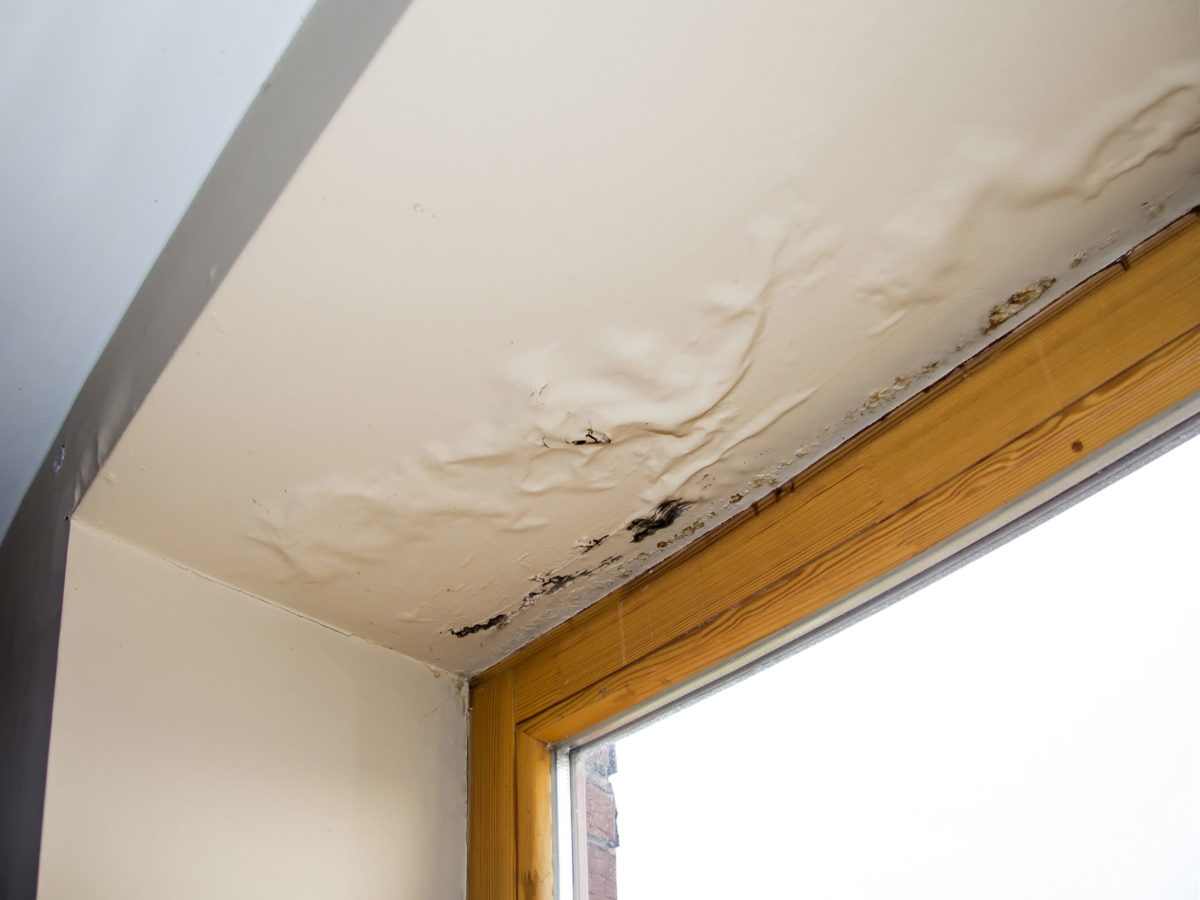
Humidity & Moisture Damage Roof Repair in McAllen, TX
When the Water in Your Roof Came From Inside
Owners almost always assume a wet roof means a hole in the membrane. In McAllen, that assumption is frequently wrong, and chasing a leak that isn't there is how a roof gets patched three times and still fails. The Rio Grande Valley stays humid through most of the year, and that humidity pushes moisture vapor up through the roof assembly from the conditioned space below without a drop of rain ever falling. Cold-storage and produce-cooling tenants around the Pharr produce district, grocery and restaurant boxes along the Expressway 83 and Nolana corridors, and just about any building running its air conditioning hard against the Valley heat all drive warm, moist interior air up toward a cooler membrane. When that vapor reaches its dew point inside the insulation, it condenses and stays put. Given enough seasons it saturates the boards, rusts the steel deck from underneath, and lifts the membrane off its substrate. That is the failure we repair, the one a leak-detection crew never traces because the water never came in through the top.
What Interior Moisture Does to the Build-Up
Humidity damage announces itself in a few recognizable patterns, and by the time any of them are visible from the surface, the wet footprint underneath is usually wider than what you can see.
None of that resolves on its own, and recovering over the top without dealing with the cause just rebuilds the same moisture trap one layer higher up.
Finding the Wet Zones Before We Cut Anything
We diagnose with an infrared moisture survey before we commit to a scope or quote a number. Walked or flown during the evening cool-down, a thermal scan reads wet insulation as zones that hold the day's heat longer than the dry roof around them, so they glow warmer on the image even where the membrane on top looks perfectly sound. We then confirm those anomalies with core cuts, pulling a plug at the flagged spots to see the insulation condition firsthand, check the deck, and read how the vapor retarder was actually installed. On any McAllen building that hasn't had a documented moisture survey in the last few years, this is where the work starts, because wet insulation caught early is a patch and wet insulation caught late is a tearoff.
The Vapor Barrier Is Usually the Real Culprit
In a hot, humid climate like the Valley, the dominant vapor drive runs from the warm interior outward, which means the vapor retarder belongs low in the assembly, down near the deck, where it can stop interior moisture before it ever climbs into the insulation. We routinely open up Valley roofs and find the retarder in the wrong place, torn, or simply never installed, fighting the building physics instead of working with them. Treating the blister and ignoring the vapor management guarantees the same failure comes right back. So when we scope a repair or a recover, getting the vapor barrier correct for this climate is part of the actual work, not a line we hope to skip.
What we recommend turns entirely on how far the moisture has traveled, and the survey hands us the number we need to decide.
Left alone, humidity damage does not sit still. A roof showing a modest wet footprint this summer can present a much larger one two seasons out, quietly converting a manageable repair into a replacement. Catching it early is the whole game.
The McAllen Buildings That See This Most
Some Valley buildings are simply more prone to interior-driven moisture than others, and we walk into them expecting it. Cold-storage and refrigerated distribution space carries a steep temperature split between a chilled interior and a hot roof, which drives vapor hard toward the deck and makes a working vapor barrier non-negotiable. Food processing, commercial laundries, restaurant kitchens, and any operation putting moisture into the air all day push humidity up into the assembly far faster than a dry warehouse ever would. Even ordinary offices and retail boxes along the busy commercial corridors, run cold against the South Texas summer, generate enough vapor drive over years to saturate a poorly built roof from the inside. When we know what is happening under the roof, we know exactly what to look for on top of it.
Fixing the Cause, Not Just the Symptom
The repairs that fail are the ones that chase the blister and leave the vapor alone. We have stood on roofs that were patched two and three times in the same square of membrane, because each previous crew sealed the surface and walked off while the moisture source kept feeding the assembly from below. Our approach treats the diagnosis as the real job: the infrared survey and the core cuts tell us where the water is and how it got in, and the scope answers both. In practice that can mean correcting the vapor retarder position during a recover, adding a relief or venting detail where the design allows it, improving how the assembly handles the interior load, and only then rebuilding the membrane on top. It is more thought up front and far less money over the life of the roof, because the repair holds the first time instead of the third.
We also loop in whoever runs the building's mechanical systems when the moisture load itself is part of the problem. A roof cannot out-engineer a space that is being operated far wetter than its design ever assumed, and telling you that honestly is part of handing you a fix that lasts rather than a patch that comes back next rainy season.
If you are seeing blisters, soft spots, ridging, or steadily climbing cooling bills on a building in McAllen, Edinburg, Mission, or Pharr, send us the building location and a note on what you are noticing inside. We start with an infrared moisture survey, confirm it with cuts, and give you a repair-versus-replace comparison grounded in what the roof is actually doing, not a guess made from the parking lot.
What we document
For Humidity & Moisture Damage Roof Repair, we record field photos, roof observations, moisture concerns, access assumptions, excluded conditions, and the owner decision that moves the work forward.
Next step
Call 956-302-5444 when Humidity & Moisture Damage Roof Repair needs a roof walk, repair path, budget opinion, or written scope for a McAllen commercial property.