
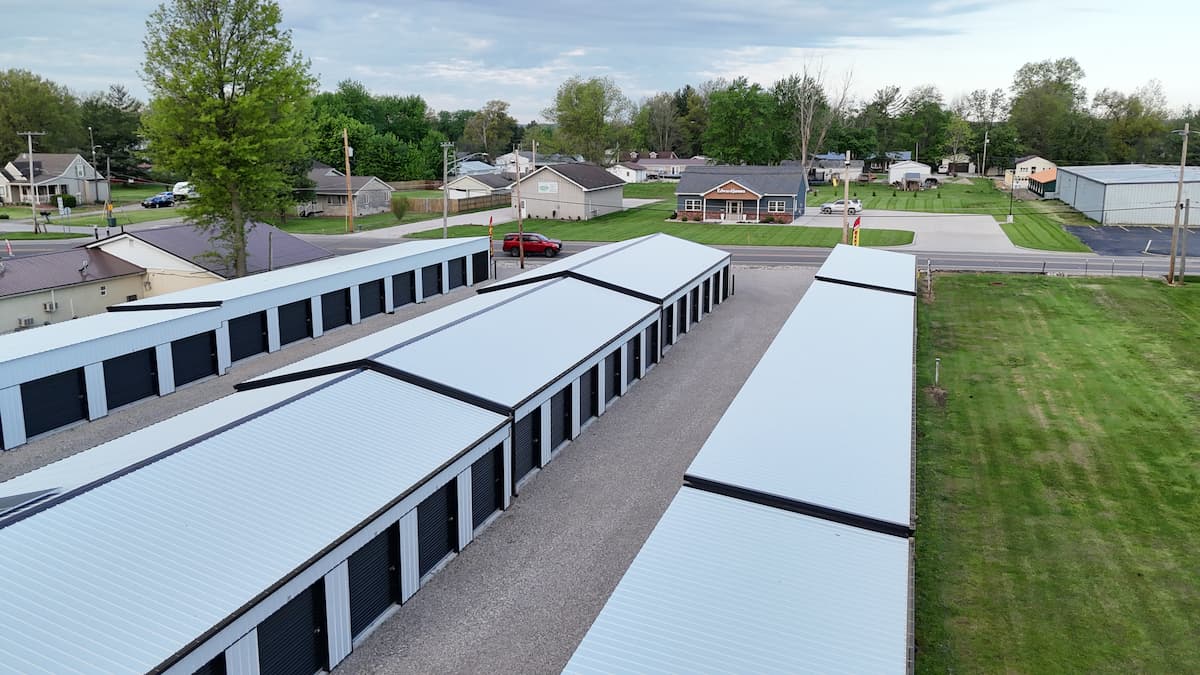
Self-Storage Facility Roofing in McAllen, TX
Self-Storage Facility Roofing in McAllen, TX
StorageMart and U-Haul Self-Storage both operate established facilities in McAllen, Texas, and the Rio Grande Valley's self-storage market presents roofing challenges driven almost entirely by heat, UV radiation, and the intense hailstorms that occasionally sweep through the lower Rio Grande Valley with little warning. McAllen sits at the southern tip of the Texas hail corridor, and while it experiences fewer hail events than North Texas markets, the hailstorms that do reach the Valley tend to be severe and arrive at the end of long storm tracks that have already produced large stones.
Heat and UV exposure in McAllen is among the most intense in the continental United States. The city averages over 220 sunny days per year, and summer temperatures regularly exceed 100 degrees Fahrenheit. Roof surface temperatures on dark-finish membrane systems can reach 175 to 185 degrees in McAllen, approaching the threshold at which many standard adhesive systems begin to soften and lap seams can creep. High-reflectivity TPO or PVC membranes reduce surface temperatures by 40 to 60 degrees and are not merely an energy efficiency choice in this climate — they are a material durability choice that extends service life by five to ten years compared to dark membranes under the same conditions.
Large-footprint storage campuses in McAllen often include extensive covered drive-through areas and outdoor boat and RV storage under metal canopy roofs. These structures face different but equally serious weather risks: metal roofing panels in the Rio Grande Valley are subject to severe UV degradation that bleaches and embrittles panel coatings, fastener hole enlargement from thermal cycling, and the occasional hailstorm damage that creates thousands of small dents and potential leak points simultaneously. A comprehensive roofing program for a McAllen storage campus must address both membrane and metal roofing systems.
Hail preparation is essential for McAllen storage facilities even though frequency is lower than North Texas. When hailstorms do reach the Valley, they often arrive as isolated supercell events that produce large stones concentrated in a narrow track. A single storm can devastate every property along a half-mile corridor while leaving adjacent areas untouched. FM 4473 Class 4 impact-resistant membranes on enclosed storage buildings provide meaningful protection and insurance premium benefits that more than offset the cost premium over standard membranes.
Drainage on McAllen storage properties must account for the city's distinct rainfall pattern: months of near-drought conditions punctuated by intense convective storms and the occasional tropical system moving up from the Gulf. Tropical Storm Hanna in 2020 brought several inches of rain to the Valley in a short period, and storage facilities without properly maintained drainage systems experienced both roof ponding and perimeter flooding simultaneously. Drain cleaning should be performed before the June-October peak season and after any major rain event.
Tenant protection during McAllen roofing projects requires attention to heat as much as rain. Working in 100-degree summer heat requires strict safety protocols for crews and careful scheduling to protect any exposed insulation or adhesive products from thermal degradation before they are covered. Some adhesive products have application temperature limits that are exceeded during McAllen summer afternoons, requiring morning installation schedules or heat-resistant formulations. A contractor unfamiliar with Rio Grande Valley summer conditions can inadvertently void a membrane warranty by applying products outside their rated temperature range.
Vapor drive in McAllen storage buildings is directional and powerful. The combination of high outdoor humidity and the cooling effect of climate-controlled units creates a strong inward vapor pressure drive from the hot, humid exterior toward the conditioned interior. Vapor retarder design must address this direction of drive — the wrong installation sequence or an inappropriate vapor retarder can trap moisture within the roof assembly and cause insulation degradation that is not visible until it manifests as a bubble or blister in the membrane.
Preventive maintenance on McAllen storage properties should be concentrated in two periods: pre-storm-season inspection in May and post-storm-season inspection in November. The May inspection should confirm drain function, check flashing condition after winter temperature cycling, and verify that membrane seams are secure before the summer storm season begins. The November inspection assesses any storm-season damage and prepares the facility for the short, mild McAllen winter.
Contractor selection in the McAllen market should emphasize experience with Rio Grande Valley climate conditions specifically, as the combination of extreme heat, UV exposure, vapor management requirements, and occasional tropical storm impact is different from both North Texas and coastal Gulf markets. Texas contractor licensing (TDLR registration where applicable), manufacturer certifications, and references from Valley storage projects are the key qualifications to verify.
What we document
For Self-Storage Facility Roofing, we record field photos, roof observations, moisture concerns, access assumptions, excluded conditions, and the owner decision that moves the work forward.
Next step
Call 956-302-5444 when Self-Storage Facility Roofing needs a roof walk, repair path, budget opinion, or written scope for a McAllen commercial property.