
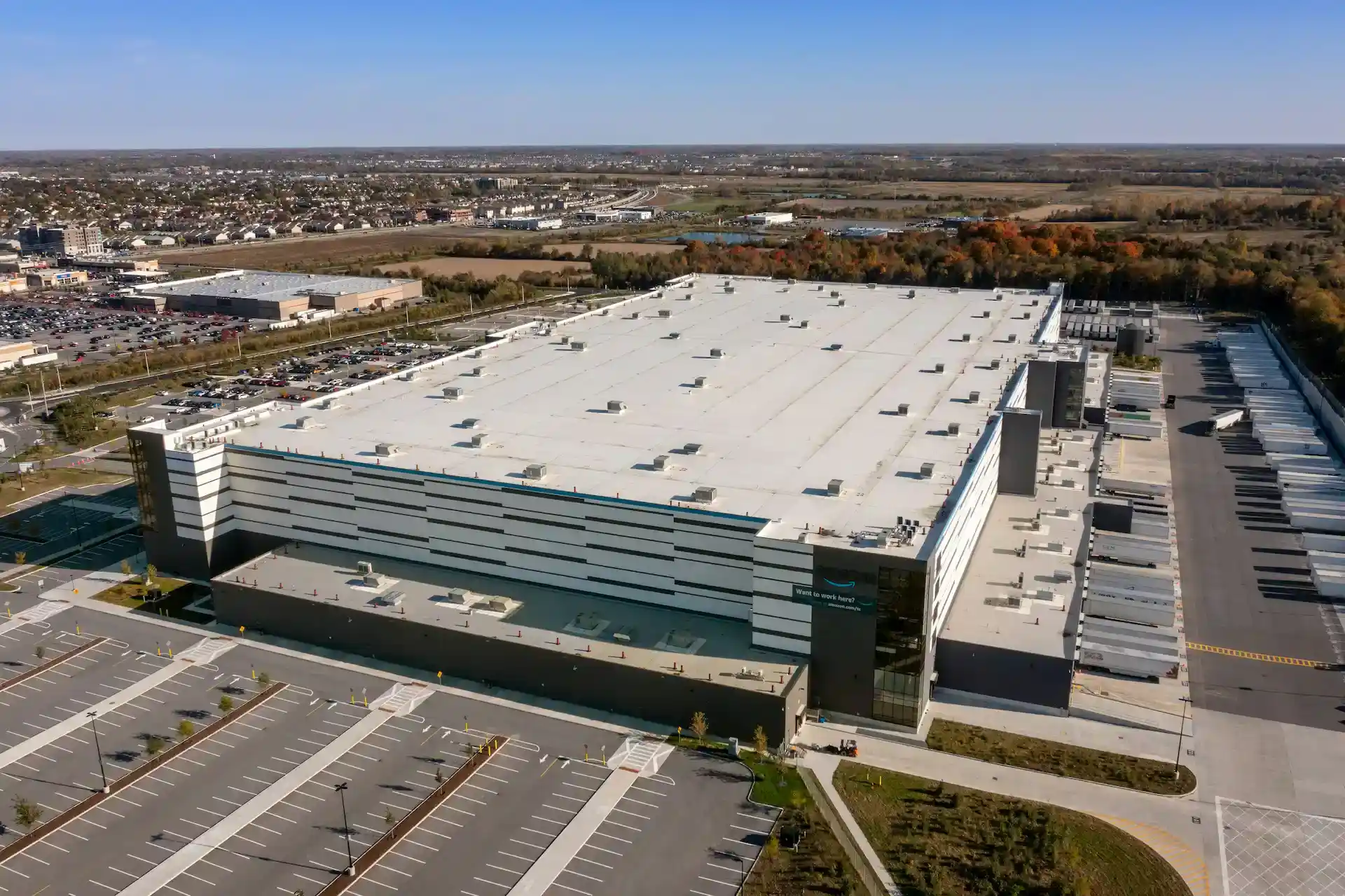
Warehouse and Distribution Center Roofing in McAllen, TX
Warehouse and Distribution Center Roofing in McAllen, TX
HEB operates a major distribution center in the McAllen area that serves its Rio Grande Valley store network, and the scale of that facility reflects the growing importance of South Texas as a logistics hub connecting US retail supply chains with cross-border manufacturing in Mexico. McAllen's warehouse roofing market is defined by a climate that is essentially subtropical: summers that are relentlessly hot and humid, an annual average temperature near 75°F, and a total absence of freeze events that allows south Texas operators to deprioritize cold-weather roofing features that are critical in northern markets. What McAllen warehouse roofs do face is intense solar radiation, high UV exposure, occasional hurricane-associated wind events, and a severe convective storm season that delivers intense rain in short bursts.
Solar heat load is the dominant factor in McAllen warehouse roofing. Surface temperatures on a dark-colored EPDM membrane in a McAllen August routinely exceed 190°F, which creates enormous cooling loads for any warehouse with climate-controlled or refrigerated storage. White TPO is the correct base specification for McAllen warehouse roofing—not as a preference but as a practical necessity for operators managing utility costs. The reflective surface of white TPO reduces cooling loads by 20–30% in this climate compared to dark membranes, which translates to meaningful reductions in monthly electricity bills for large facilities. Texas has no statewide cool roof mandate for commercial buildings, but the economics are compelling without any regulatory driver.
Drainage design for McAllen warehouse roofs must account for the intense convective storms that occur throughout the May-through-October season and the tropical weather systems that occasionally affect the lower Rio Grande Valley. Rainfall intensity during McAllen thunderstorms can exceed 4 inches per hour, and the design storm event for drain sizing should be the 100-year event rather than a more conservative average. Internal drains should be generously sized, strainers maintained monthly during storm season, and secondary overflow scuppers installed with clear, unobstructed discharge paths. The flat topography of the Rio Grande Valley means that water has nowhere to go if it overtops a parapet—it sits on the roof until it finds a crack or penetration.
Dock penetrations in McAllen warehouse facilities benefit from the same subtropical climate that creates roofing challenges: thermal cycling at dock penetrations is less severe than in northern markets, and freeze-related sealant failure is essentially absent. The main penetration maintenance challenge in McAllen is UV degradation of standard neoprene pipe boots, which develop surface cracking and eventually lose their seal within 5–7 years in South Texas's intense UV environment. Silicone-coated EPDM boots or UV-stabilized TPO boots have significantly better longevity at this latitude and are the appropriate specification for new installation and penetration replacement work.
Forklift exhaust equipment in McAllen warehouses, particularly in cross-border logistics facilities, often operates at higher cycle rates than comparable facilities in northern markets because of the extended operating hours driven by maquiladora supply chain integration. High-temperature exhaust stacks that see continuous use for 16–20 hours per day require flashing maintenance at shorter intervals than the standard annual cycle—a twice-annual inspection with high-temperature silicone sealant resealing is appropriate for high-cycle exhaust penetrations. Battery electric forklift adoption is accelerating in newer McAllen facilities, particularly those serving US retail supply chains with sustainability commitments.
Wind load design in McAllen warehouse roofing must account for the region's exposure to tropical storm and hurricane wind events. While direct hurricane landfalls in the McAllen area are relatively rare, the lower Rio Grande Valley is within the wind damage zone for Gulf of Mexico hurricane events, and wind design requirements for commercial buildings in Hidalgo County reflect this exposure. Membrane attachment specifications for McAllen warehouses should use the wind uplift calculations for the local wind speed exposure rather than defaulting to national minimums. Edge flashings, copings, and mechanical fastener layouts must be designed for the elevated edge and corner zone wind pressures that apply in this region.
Energy efficiency in McAllen warehouse roofing is almost entirely a cooling-season concern. The heating degree days in McAllen approach zero, and the roof insulation R-value primarily affects summer cooling load rather than winter heating. Texas commercial energy code requirements under the Texas Energy Code apply to most commercial buildings, and the McAllen area falls into the warm climate zone where the code is primarily concerned with reflectance and cooling load reduction. A white TPO roof with R-25 polyiso insulation meets current Texas Energy Code requirements and delivers meaningful operating cost benefits in McAllen's climate.
The McAllen commercial roofing contractor market serves both the domestic US market and the cross-border construction market, which creates a contractor community with mixed experience levels in commercial membrane systems. Priority qualifications for a large McAllen warehouse project include a Texas roofing contractor license, manufacturer certification from Carlisle, Firestone, or GAF, and references from comparable commercial projects in South Texas. The cross-border construction market in McAllen includes contractors whose primary experience is with different building systems, and verifying specific commercial membrane experience is more important here than in markets where the contractor pool is more narrowly focused on domestic commercial work.
Replacement costs for McAllen warehouse roofing run lower than national averages due to the area's competitive labor market, but material costs reflect the freight distance from major distribution centers. Budget $8–$12 per square foot for a standard TPO recover with new polyiso insulation, and $12–$16 for a full tear-off and replacement. Hurricane and tropical storm damage to commercial roofs in the Rio Grande Valley is covered under commercial property policies, and McAllen building owners should review their policy's windstorm provisions specifically—some Texas policies have separate hurricane deductibles that apply to wind damage in coastal-adjacent counties.
What we document
For Warehouse and Distribution Center Roofing, we record field photos, roof observations, moisture concerns, access assumptions, excluded conditions, and the owner decision that moves the work forward.
Next step
Call 956-302-5444 when Warehouse and Distribution Center Roofing needs a roof walk, repair path, budget opinion, or written scope for a McAllen commercial property.