
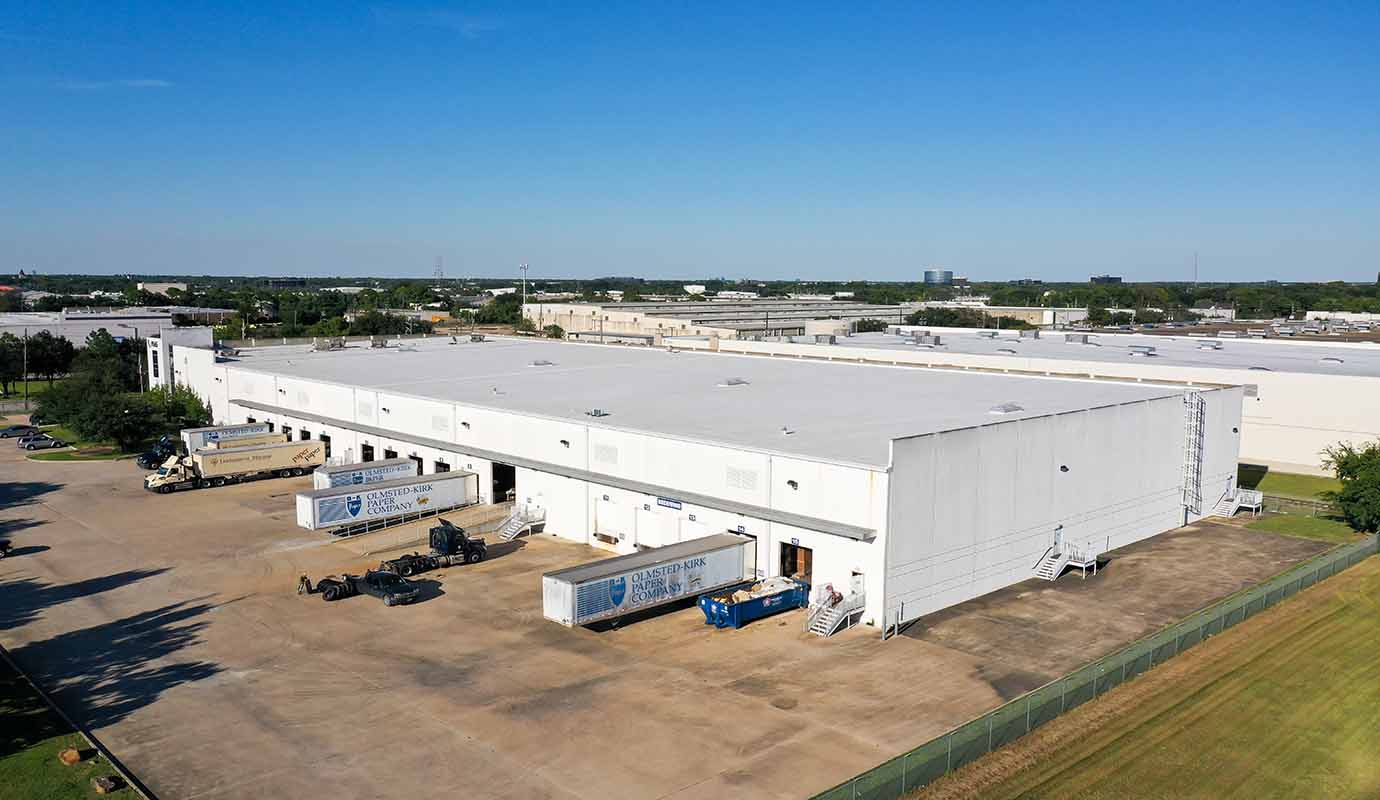
REIT Roofing Services in McAllen, TX
McAllen anchors the Rio Grande Valley as the region's dominant commercial hub, and industrial and retail REITs like INDUS Realty Trust and net-lease operators have recognized the market's unique position — a bi-national economy driven by cross-border trade with Mexico that has made McAllen one of the fastest-growing commercial real estate markets in Texas despite its remote geographic position. For asset managers overseeing retail, industrial, and logistics properties in Hidalgo County and the broader RGV market, roofing carries both the South Texas climate risks that define the region's physical maintenance demands and the institutional management standards that REIT investors expect regardless of where properties are located. Hurricane exposure, extreme heat, and high UV intensity create a combination of stressors that compresses roof useful life and requires the structure of a preferred vendor program to manage predictably across a multi-property portfolio.
Multi-property preferred vendor programs in McAllen address a market-specific challenge that asset managers from outside the Rio Grande Valley sometimes underestimate: qualified commercial roofing contractors with genuine large-scale capacity in the RGV market are fewer than in comparable-sized metros, making preferred vendor relationships not simply a cost management tool but a supply security measure. When a significant weather event — tropical storm remnants, severe hailstorms that track through the corridor, or a hurricane threatening the Gulf Coast — generates simultaneous demand for roofing assessment and repair across the RGV, asset managers with pre-established MSAs receive priority service. Those without standing relationships are placed in a queue behind existing clients in a market where contractor capacity is structurally limited.
The NOI impact of deferred roof maintenance in McAllen's commercial market is amplified by the region's climate severity. South Texas UV intensity is among the highest in North America, and McAllen's summer heat — with extended periods above 100°F — imposes thermal stress on roofing materials at an intensity that compresses useful life substantially below what national averages would predict. TPO membranes and modified bitumen systems that might last 20 to 25 years in a temperate climate may require assessment and potential replacement consideration at 12 to 15 years in the McAllen environment. Asset managers who apply national useful life benchmarks to RGV portfolios without climate adjustment are systematically underestimating capital requirements and overstating free cash flow to investors.
Ten-year CapEx reserve models for McAllen REIT portfolios require aggressive useful life reductions relative to national norms, combined with Texas-specific hurricane exposure probability factored into the probabilistic reserve line. McAllen's distance from the Gulf Coast provides some attenuation of direct hurricane impact, but tropical storm and severe thunderstorm remnants regularly deliver high wind and hail events capable of causing significant roof damage. Reserve models that ignore this probabilistic risk and account only for thermal degradation-based aging will produce reserve levels that consistently prove inadequate when weather events trigger replacement ahead of normal schedule.
Pre-acquisition property condition assessments for McAllen commercial properties should include specific evaluation of UV coating condition and thermal degradation relative to actual years of South Texas climate exposure — not age alone. A 12-year-old TPO system in McAllen may present condition characteristics more consistent with an 18-year-old system in a northern climate. Without a specialist contractor who understands RGV climate impacts on roofing materials, generalist PCA inspectors are likely to score condition based on age and visual appearance in ways that understate actual capital urgency and create reserve shortfalls shortly after close.
REIT accounting for McAllen roof projects follows standard CapEx versus OpEx frameworks, with the additional complexity of hurricane and storm-related insurance claim work that occurs more frequently in South Texas than in most comparable commercial markets. Insurance proceeds for storm damage restoration are typically applied as CapEx basis reductions, while the replacement work itself may qualify as OpEx if it restores to prior condition or CapEx if it materially improves the system. Under the NNN lease structures that dominate McAllen's retail and industrial portfolio, tenants bear routine maintenance responsibility while the landlord retains structural replacement obligations — creating a monitoring requirement that ensures tenant maintenance obligations are actually being performed rather than deferred in ways that compound landlord future liabilities.
McAllen's bi-national economy creates commercial real estate demand characteristics that differ meaningfully from other Texas secondary markets. International trade volumes through the Hidalgo-Reynosa border crossing drive industrial and logistics demand from retailers and manufacturers sourcing from Mexico, making industrial REIT holdings in the RGV market particularly sensitive to trade policy and supply chain dynamics that affect tenant occupancy. Stable tenant relationships on industrial and retail assets are the foundation of RGV portfolio performance, and building condition — including roof quality — is a visible signal of landlord management standards that tenants evaluate when making renewal and expansion decisions.
Managing a single trusted roofing contractor across a McAllen portfolio eliminates the coordination friction that multiplies with each additional vendor in a market where qualified commercial contractors are limited. A contractor with standing relationships, portfolio-wide inspection history, and pre-established insurance documentation protocols can mobilize for post-storm assessments across multiple properties simultaneously — a critical capability in a market where weather events affect entire portfolios at once. That institutional familiarity also means faster diagnostic assessment, more accurate damage quantification, and insurance claim documentation that maximizes recoverable proceeds.
For REIT portfolio managers with McAllen and Rio Grande Valley commercial exposure, the management imperative is clear: the combination of extreme UV and thermal stress, hurricane probability, limited contractor supply, and fast-growing commercial demand creates a roofing management environment that rewards the structure of a preferred vendor program and penalizes reactive, ad-hoc approaches. A single capable local contractor, a comprehensive MSA, and a reserve model calibrated to South Texas climate reality are the tools that transform RGV roof management from a reactive cost center into a predictable, controlled component of portfolio operating performance.
What we document
For REIT Roofing Services, we record field photos, roof observations, moisture concerns, access assumptions, excluded conditions, and the owner decision that moves the work forward.
Next step
Call 956-302-5444 when REIT Roofing Services needs a roof walk, repair path, budget opinion, or written scope for a McAllen commercial property.